


Leadership
Efficiency Investments Expand Capacity for New Space Customers
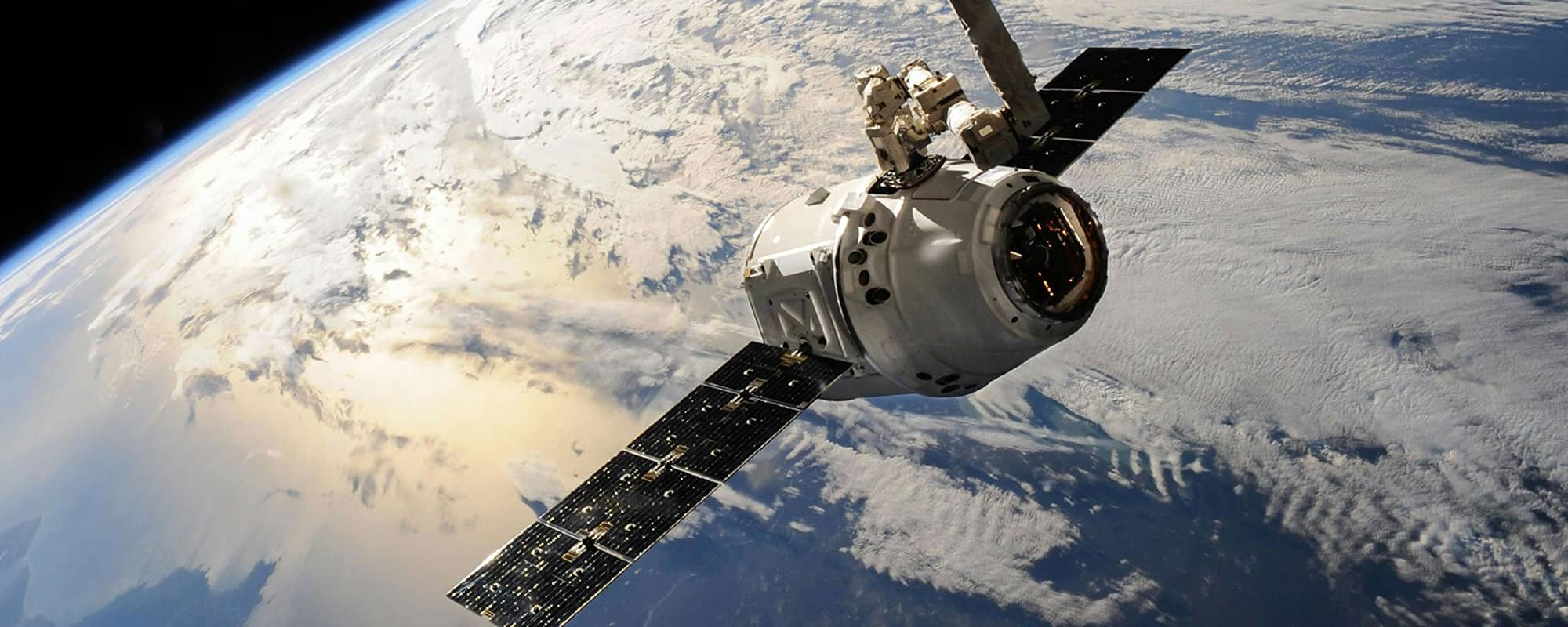
Outer space is a busy place. The 2020s have seen a series of record-breaking years, and 2025 is expected to keep pace with 2024’s unprecedented 259 rocket launches around the world. Many of those carry the small, inexpensive satellites (smallsats) that have made internet access ubiquitous, even in the most remote places. A significant number of those satellites rely on Timken products — from bearings to Cone Drive actuators.
Over the past decade, New Space companies have disrupted the satellite market with smallsat designs destined for low earth orbit (LEO), 100 to 1,200 miles from the Earth’s surface. As the market matures, however, customers are moving toward larger, more reliable smallsats with bigger payloads and functionality.
“Government customers deploy LEO satellite constellations for weather monitoring, reconnaissance or scientific research purposes,” says John Renaud, principal application engineer, “They have a harder time relaxing their requirements than commercial customers do.”

Timken bearings play a critical role on NASA flagship applications such as the Europa Clipper and the James Webb Space Telescope
As launch costs drop and payload demands grow, small satellite makers are shifting toward larger, more capable platforms. “Customers are demanding greater return on their investments and the industry is returning to a balance that prioritizes cost affordability and reliability,” says Cory Smith, principal sales engineer.
To help customers achieve that balance, Timken is investing in efficiency and working closely with customers to improve the quality and reliability of smallsats, while shortening delivery times and keeping costs manageable.
The key: Close customer partnerships
Aerospace customers, whether they’re legacy companies or startup ventures, benefit from Timken’s cross-functional approach, says Smith. “We engage customers as a team. Our early efforts to align support for one recent program helped cut the lead time in half.”
When New Space customers need a simple solution, Timken application engineers use Syber modeling tools to determine the performance implications of commercial off-the-shelf (COTS) bearings. “In some cases, we can modify a COTS offering to meet certain criteria while eliminating the cost of nonessential offerings,” says Smith.
Many customers work in-house, right alongside Timken engineers and plant operators. “Our employees take great pride in that partnership,” says Jeff Smith, who manages the Timken facility in Keene, New Hampshire.
Renaud frequently goes out to the shop floor to monitor progress and help resolve issues. “We often custom design for the application and manufacture to tolerances that are not available elsewhere,” he says. “Whether it’s a custom part or a standard one, we’re committed to getting things right the first time.”
Timken investments help keep aerospace customers on the leading edge in every sector:


Upgrading processes to expand capacity and efficiency
The Keene plant is investing $11 million to make operational and technological improvements, adding to a $13.8 million agreement with the U.S. Department of Defense to strengthen U.S. supply chains by increasing production of high-precision ball bearings. It’s an investment that helps Timken maintain quality while helping customers reduce costs for mission-critical applications.
Renaud describes one large defense contractor whose reaction wheel assemblies (RWAs) help hold satellites still so they can point at fixed targets on the ground. “Those RWAs support the country’s security,” he says. “We are all proud of their record of 200 million service hours without a mission failure.”
Timken bearings play a critical role in that achievement. “I’ve had the honor of working on NASA flagship applications like the Mars Rover and the Europa Clipper,” he says, “but the fact that this defense contractor can make that claim based on a product that we designed — that’s probably had the greatest impact on my career. As we ramp up production to meet industry growth, we’re doing it with a commitment to making sure records like this one live on.”

Jeff Smith
Plant Manager
Location: Keene, New Hampshire
Years with Timken: 24
ON WHAT KEEPS HIM GOING:
“The applications we work on matter to the world. They matter in my life and in my family’s life. That connects me and gives me purpose.”

Cory Smith
Principal Sales Engineer
Location: Chandler, Arizona
Years with Timken: 13
ON WHAT INSPIRES HIM:
“The fact that I can have a positive impact on these space missions — it’s a true kind of honor.”

John Renaud
Principal Application Engineer
Location: Keene, New Hampshire
Years with Timken: 18
ON THE BENEFIT OF WORKING IN BEARINGS:
“Some engineers work on one thing for five years and that’s all they see. Here, we get exposure to a diversity of applications, systems and customers, and that keeps every day interesting.”
Timken engineers have been developing solutions for NASA missions since 1958. When the James Webb telescope launched in 2021, it carried Timken technology on board. Read more.
Last Updated: 2025/11/21
Published: 2025/11/18

