


Innovation
Fresh Food, Grown with Modern Precision
As populations expand around the world, growers are working on solutions to feed the cities of the future. Timken has served agriculture for more than a century, supporting transformative equipment technologies that help farmers maximize their resources. Today, Rollon by Timken is helping innovators transform farming once again with vertical farms that produce food with the precision of modern engineering: indoors, at scale, and with consistency.
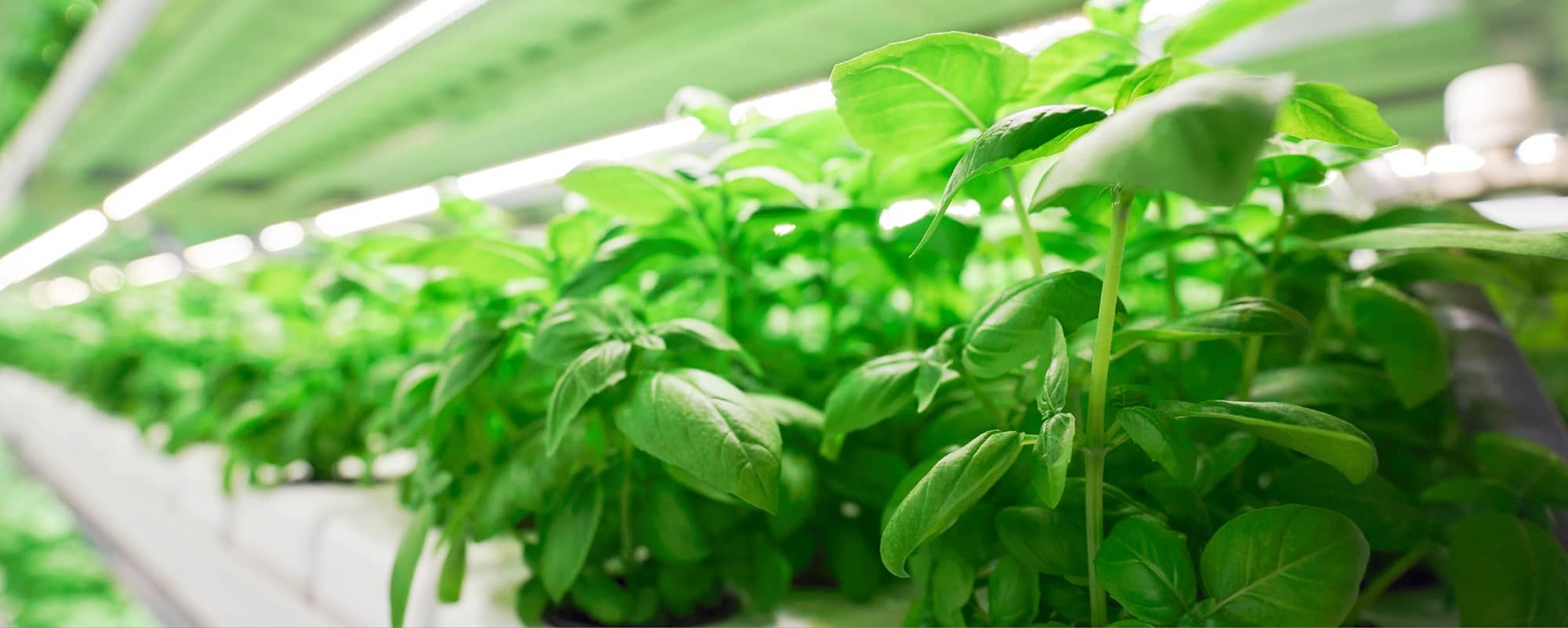
Vertical farming is the process of growing vegetable or fruit crops, high-protein insects or edible mushrooms in stackable, climate-controlled environments that use less land, fewer pesticides and less water. Farms are often placed close to the point of consumption, minimizing transport costs.
To make the economics work, these farms are becoming fully automated, and Rollon’s expertise in material handling and intralogistics is making a big difference. “Customers are using solutions already proven in those markets and applying them to vertical farming,” says Francesca Sgambetterra, business development analyst.
Challenging environments require robust automation

Rollon’s portfolio of linear, telescopic, and curved motion solutions allows robotic systems to execute precise movements across axes in vertical farms.
Inside a vertical farm, heavy trays — often larger than a meter square — are constantly on the move, providing access to the robotic systems that are involved in every phase of the operation, from seeding and germination to transplanting, harvesting, washing and packaging.
Growing conditions are challenging: Lettuces, strawberries or mealworms produce organic residues and waste contaminants, as well as moisture. Mushrooms grow in conditions of extreme humidity. Loads can be uneven or misaligned.
“To keep crops healthy and optimally productive, vertical farming systems must run 24/7 with no unexpected downtime,” Sgambetterra says. Rollon’s compact, corrosion‑resistant linear and telescopic rails and actuators allow heavy‑duty trays to move smoothly and safely in tight spaces. Stainless‑steel linear guides resist corrosion. Self-aligning compact rails tolerate variable, debris-prone conditions.
Custom and modular by design
Vertical farming is a perfect fit for Rollon’s approach, which combines a modular product platform with customer-focused engineering. Design engineers join early customer visits, and each solution is tailored to the application. “How we solve the problem varies, sometimes adding an extra length to a linear guide, or a different shape to the slider of a telescopic rail, or a different pattern of holes to fit,” says Alberto De Giorgi, business development manager. “The ingredients are standard, but the solution is always tailor-made.”
The modular mindset applies to industry expertise, as well. “A vertical farm is basically a big logistics system,” says De Giorgi. “Logistics, intralogistics, material handling — these are areas where Rollon has years of experience and expertise. The specific vertical farming challenges keep our work interesting, but at a basic level, we’re transferring proven system behaviors that we’ve worked with many times before.”
“It’s an exciting new industry. We’re learning with our customers and supporting them in their quest for positive environmental impact and a more resilient future.”
Alberto De Giorgi
Business Development Manager
Reimagining food systems and building resilience.
While vertical farms aren’t expected to pop up in every neighborhood anytime soon, visionaries are considering how they can supplement and integrate within food systems of the future. Innovators in the United States and Europe are delivering eye-catching projects that appeal to high-end food markets — restaurants featuring their own indoor farms, for example. Meanwhile, regions already limited in land and water, such as the Middle East and parts of East Asia, see vertical farming as a practical priority for building resilience into their food systems.
Vertical farming has spawned a sizable ecosystem of component suppliers and system manufacturers and integrators, many headquartered in The Netherlands. Automation, while it adds high initial investment, reduces labor costs and improves product consistency.
“It’s an exciting new industry,” says De Giorgi. “We’re learning with our customers and supporting them in their quest for positive environmental impact and a more resilient future.”
Learn more about how Rollon’s modular approach allows customers to set up automation systems in a matter of weeks, rather than months, and supports automation in vertical farms and greenhouses.
Last Updated: 2025/12/19
Published: 2025/12/16